Cibi is building Atlas Research.
Hi, I’m Cibi. I’m an alignment researcher setting up Atlas Research, an ASI alignment organization working on Robust Superalignment.
Before this, I was a mindfulness tech founder, a lead product manager and a software engineer, and I studied computer science at the University of Waterloo.
If model capabilities keep rising without plateauing, aligning them may be one of the most important and urgent problems humanity faces.
That’s what drew me to AI safety. I’ve worked on it full-time for the last four and a half months, through BlueDot’s AGI Strategy and Technical AI Safety programs and more than 300 conversations with researchers, founders and grantmakers across the field.
Most alignment work makes a model behave well and then checks that it does. I care about whether it keeps doing so: through further fine-tuning, through capability gains, and eventually through the training it helps run on its own successors. Robust Superalignment is a set of methods that make alignment an intrinsic, invariant property of a model, rather than a layer applied at the end. Its first hypothesis, Latent Invariant Alignment, holds that the low-dimensional structure carrying a model’s values can be shaped early in training, so that it stays in place and keeps steering behaviour long after.
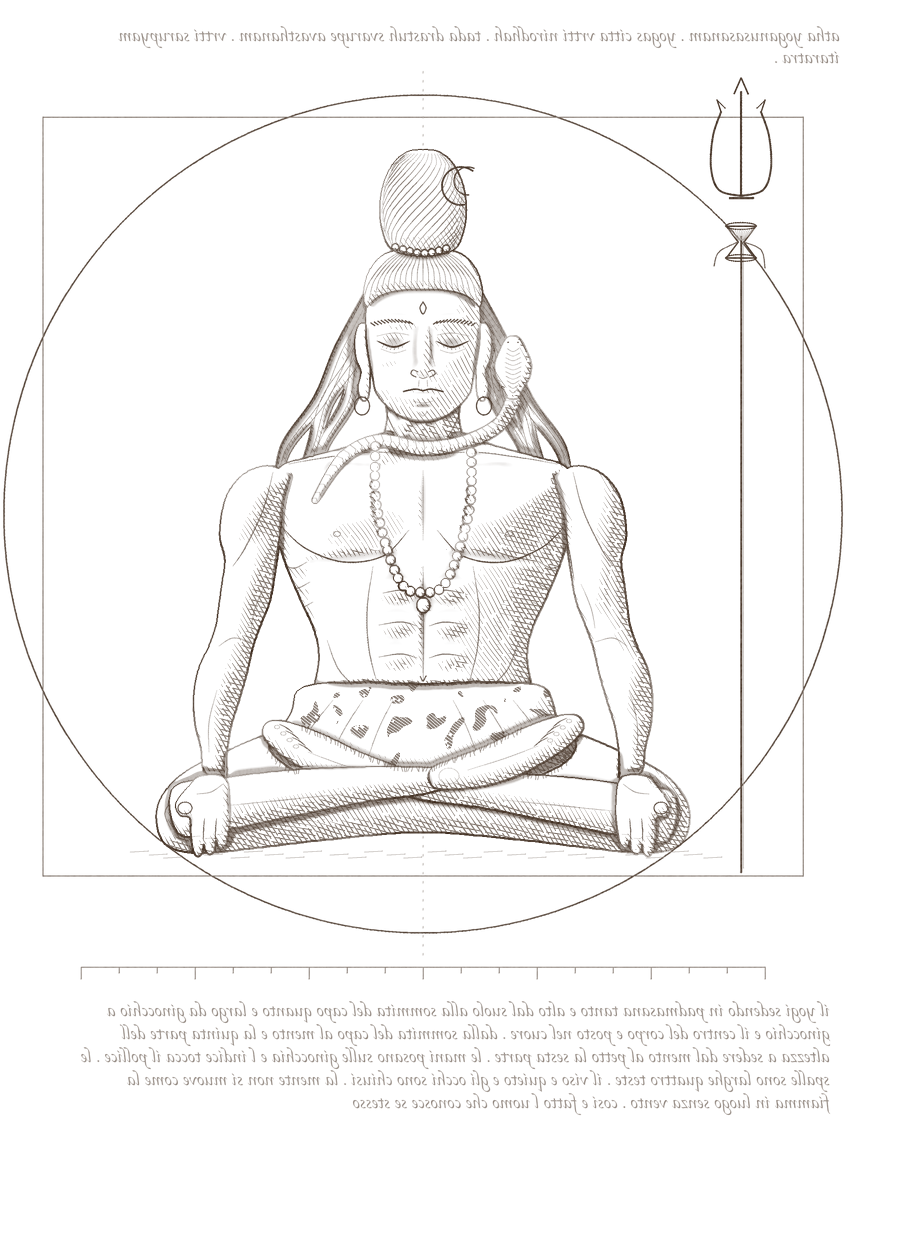
My practice shapes how I approach this. Yoga works on the mind that generates reactions rather than on the reactions themselves, so suffering is met before it arises. I think alignment deserves the same ambition. That’s what draws me to under-explored ideas from neuroscience, and from how people come to hold values in the first place.
01Now
- Building
- Atlas ResearchFounder & CEO An ASI alignment research organization. The agenda leads with Robust Superalignment and a first experiment on Latent Invariant Alignment, followed by AI-automated alignment research and scalable oversight. I’m looking for a research co-founder to lead the technical work. Read the launch post
- Prototyping
- CruxAtlas’s first concept An adversarial reviewer that tries to break AI-generated alignment research before anyone builds on it. I prototyped it over a weekend at BlueDot’s AI for Epistemics hackathon with Julian Quick, an incoming alignment scientist at AE Studio. Read the postSee the deck ↗
- Exploring
- Collaboration Alignment research collaborations, fellowships and roles, particularly on making alignment hold as models scale, and funders for Atlas. Email me
02Experience
- 2026 Atlas ResearchFounder & CEO Founded an ASI alignment research organization built around Robust Superalignment and AI-automated alignment research.
- 2025–26 NirvanaFounder & Head of Product Founded a mindfulness company for technology leaders. Our first product, Foundation, attracted early users from OpenAI, Meta and Coinbase, and won enterprise pilot offers through founder-led sales.
- 2021–24 bld.aiLead Product Manager and Head of Venture Studio Promoted twice, to Lead Product Manager. Scaled an AI meeting assistant to serve hundreds of thousands of users. Embedded at Uber, I led product for a compensation platform that allocated $3.5B in pay, with customers including Coinbase and Two Sigma. Also ran the company’s venture studio, which launched seven products: three gained traction, one raised $1.2M and one was acquired.
- 2020 Lifion by ADPTechnical Product Manager, Mobile Led a team of 12 engineers and 2 designers that took a low-code platform from zero to seven-figure ARR and six enterprise customers.
- 2019 FaireSoftware Engineer, Growth Joined as the third iOS engineer and built search, checkout and the experimentation stack behind the marketplace’s iOS app.
- 2017–19 Loblaw Digital, TribalScale, InklingSoftware Engineer Shipped consumer apps at scale, including Carnival Cruise Line’s iOS restaurant booking for 300K monthly users and a CBS Radio Roku app built from scratch in eight weeks.
- Education University of WaterlooComputer Science, Business Option LinkedIn ↗
03AI safety
- Introducing Atlas ResearchAn ASI alignment research organization working on one question. When a model keeps training, what keeps its alignment intact?
- Robust SuperalignmentHow long a model's alignment lasts may be a property in its own right, separate from how aligned it looks today. How I'd measure it, with correctability scored alongside.
- Latent Invariant AlignmentCan the internal structure that carries a model's alignment be shaped early in training so it stays in place, and keeps doing its job, as the model keeps training?
- Yoga for AIAlignment may last longer when a model's sense of who it is stays steady under pressure, and that steadiness may be trainable.
- Extinction is not erasureToday's fixes for misalignment may suppress a disposition without removing it. Learning science predicts when it comes back, and what would remove it.
- Automating alignment researchOnce agents can run a week of experiments overnight, progress depends on how many of their results someone can trust. How I'd measure that, and Crux, the reviewer I'm designing for it.